
Make the Most of Your Solar.
Use Every Unit You Generate.
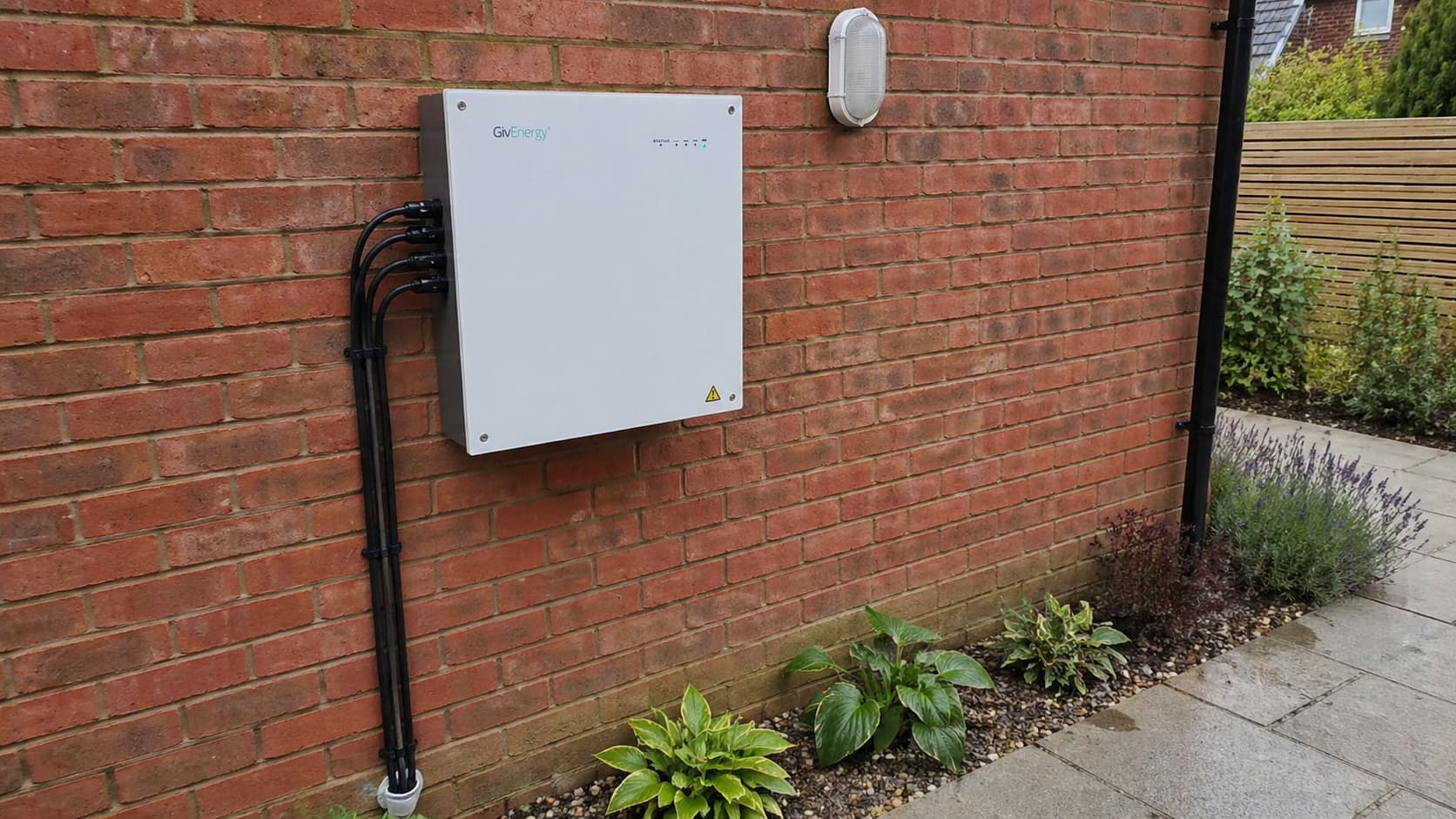
Home battery storage lets you save solar energy for the evening, charge from low-cost overnight tariffs, and keep the lights on during outages.
How Battery Storage Works
A home battery sits between your solar panels and the grid. Instead of exporting surplus electricity at a low rate and buying it back at a high rate in the evening, you store it yourself and use it when you need it most.
-
1
Solar charges the battery first
During the day, your solar panels power your home. Any surplus that would otherwise be exported goes straight into the battery instead.
-
2
Battery powers your home in the evening
When the sun goes down and your panels stop generating, the battery takes over — powering your lights, TV, fridge, and other appliances automatically.
-
3
Low-cost overnight top-up
If the battery runs low and you're on a time-of-use tariff (like Octopus Go or Agile), it automatically charges from the grid during the lowest-priced overnight window — often just 7–8p per kWh.
-
4
Grid as your backup
The grid is always there if needed, but with a full day of solar and a well-sized battery, many households run almost entirely self-sufficient for much of the year.
5 Reasons to Add a Battery
A battery transforms a good solar system into a great one — and adds value even if you don't have panels at all.
Store Solar for Evening Use
Stop exporting electricity at low export rates and buying it back at peak prices. Use your own solar energy when you actually need it — in the evenings when your family is home.
Charge from Low-Cost Overnight Tariffs
Time-of-use tariffs like Octopus Go and Agile offer electricity from as little as 7p per kWh overnight. Your battery charges automatically during these windows, so you run on low-cost electricity all day.
Backup Power During Grid Outages
Many battery systems offer backup capability. In the event of a grid outage, your battery keeps essential circuits running — lights, fridge, phone chargers — so you're never left in the dark.
Works with New or Existing Solar
Whether you're adding a battery alongside a new solar install or retrofitting one to an existing system, we can make it work. We survey your setup and recommend the best solution for your home.
Remote Monitoring via App
See your battery state of charge, real-time consumption, solar generation, and grid usage all from your phone. The app helps you optimise your usage habits and track your savings over time.
Choose the Right Size for Your Home
Battery size is measured in kilowatt-hours (kWh). A larger battery stores more energy but costs more upfront. We'll help you choose the right size during your free survey.
RECC Consumer Code member · deposits capped at 25% · every installation protected by an IAA insurance-backed guarantee on completion.
A 5 kWh battery is ideal for smaller households or those who want to start with storage and expand later. It stores enough to cover an average evening's electricity use, keeping your lights and essentials running after sunset.
Build Your SystemRECC Consumer Code member · deposits capped at 25% · every installation protected by an IAA insurance-backed guarantee on completion.
A 10 kWh system is the sweet spot for most 3–4 bedroom homes with solar panels. It stores a full day's solar surplus and provides comprehensive evening and overnight cover, minimising your grid draw significantly.
Build Your SystemRECC Consumer Code member · deposits capped at 25% · every installation protected by an IAA insurance-backed guarantee on completion.
For larger homes, EV owners, or households aiming for near-full energy independence, a 13.5 kWh battery provides maximum storage capacity. Pair it with a good solar array and you can cover most of your energy needs year-round.
Build Your SystemAll batteries include installation, electrical connection, and monitoring setup. Prices confirmed after free home survey.
What's Included
There are no hidden extras. Everything you need for a complete, working battery installation is included in the price we quote you.
- Free home survey and system design
- Battery unit and all installation hardware
- Full electrical connection to your existing solar or consumer unit
- Monitoring app setup and walkthrough
- MCS certification and all documentation
- 12-month workmanship guarantee
Battery Storage FAQs
Honest answers to the questions we hear most often.
No — a battery can be installed without solar panels. In that case it works entirely by charging from the grid, which still makes excellent financial sense if you're on a time-of-use tariff like Octopus Go. You charge the battery at low overnight rates and use that electricity during expensive peak hours. That said, the combination of solar and battery is where the biggest savings come from, so we'll always show you both options when we survey your home.
Modern lithium battery systems are designed to last 10–15 years and typically come with manufacturer warranties of 10 years or a set number of charge cycles — whichever comes first. Battery capacity does degrade very slowly over time, much like a phone battery, but the drop is modest. Brands like GivEnergy, Tesla Powerwall, and SolarEdge all carry strong warranties, and we only install products we're confident in long-term.
This depends on the battery model and how it's configured. Some batteries — like the Tesla Powerwall and GivEnergy AIO — offer full backup capability, meaning they automatically switch to island mode and keep your home running during a grid outage. Others are grid-tied only and will shut down when the grid goes down (for safety reasons). We'll discuss backup options with you during your survey so you know exactly what to expect.
Payback depends on your energy usage pattern, the size of your solar system, and the tariff you're on. For households with solar adding a battery, typical payback is 6–9 years. For battery-only installs on a good time-of-use tariff, payback is often 8–12 years. With a battery lifespan of 10–15 years and warranties to match, you're likely to see a significant return on investment. We'll give you a realistic estimate when we survey your home — we don't overpromise.
We install a curated selection of the market's most reliable brands, including GivEnergy, Tesla Powerwall, SolarEdge, and Solis. We've chosen these because they offer strong warranties, good monitoring apps, and proven long-term reliability. We don't install white-label or unbranded products. During your survey, we'll recommend the brand and model that best suits your home, budget, and usage pattern.
Yes, with most of the systems we install. Many batteries use a modular design, meaning additional battery units can be stacked onto the same inverter/controller to increase total capacity. It's a great way to start smaller to manage upfront costs and expand once you can see the real-world savings from the first unit. We'll point out which systems are expandable when we advise you during the survey.
Two Routes — Pick Yours
Most batteries are installed alongside new solar. If that's you, build your full system online. If you already have solar and just need storage, drop us a line for a retrofit quote.
Buying solar? Add a battery to your system
Pick "Solar + Battery" on our online configurator. See the all-in price instantly — panels, inverter, battery, installation, and certification, in one quote.
Build Your SystemAlready have solar? Get a battery retrofit quote
Retrofit pricing depends on your existing inverter and electrical setup. Tell us a bit about your system and we'll come back with a quote within one working day.
Request a Retrofit QuotePrefer to talk it through? Call 0330 133 2546 — no hard sell, honest advice.